
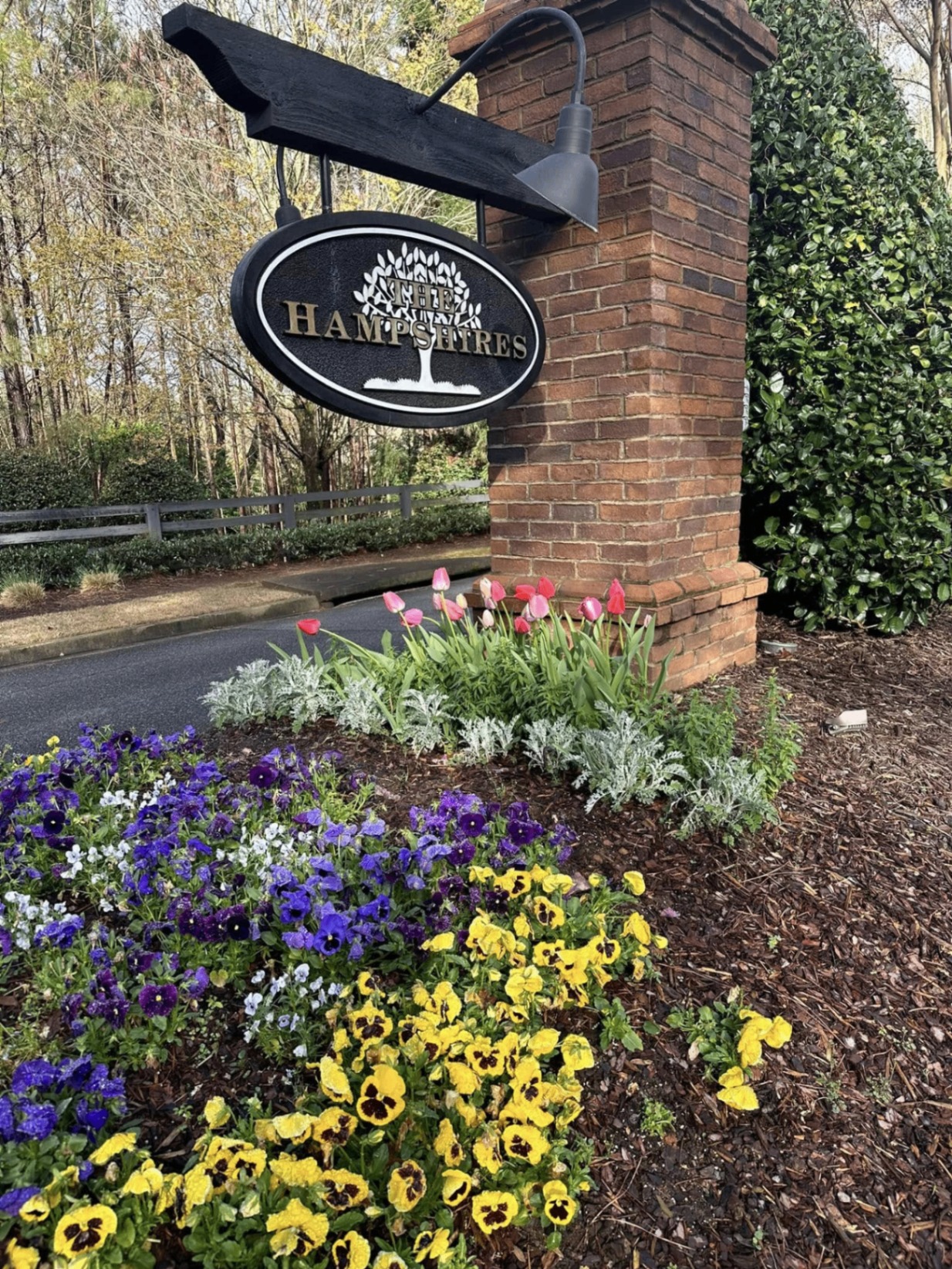
The Hampshires Property Maintenance Guide.
A practical, season-by-season playbook for maintaining a beautiful home in Milton, Georgia — written for homeowners, not lawyers.
The Spirit of the Standards
Beautiful homes, reasonable expectations, real neighbors.
The purpose of our maintenance standards is to preserve the beauty, safety, and long-term property values of The Hampshires — while recognizing the realities of homeownership and seasonal change in north Fulton County.
The Board's goal is communication and reasonable timelines, not punishment. Reminders go out neighborhood-wide before any individual conversation, and leniency is the default when life gets in the way.
Most issues resolve with a friendly note long before fines enter the conversation.
This guide is the practical version of the Covenants — written for homeowners.
Consistent maintenance protects the equity of every home in The Hampshires.
From spring pollen to winter dormancy, beauty in Milton is seasonal — and intentional.
The Most Important Section
Seasonal maintenance calendar.
Milton is intensely seasonal — pine straw, pollen, humidity, shade, storms. Here's the rhythm most Hampshires lawns follow. Tap a season.
Spring
March – May
The busiest season in Milton. Set the year up right — pre-emergent, refresh, pressure wash, gutters, mailbox.
- Pre-emergent weed treatment (apply when soil ~55°F).
- Scalp & fertilize Bermuda / Zoysia as it greens up.
- Overseed shaded fescue areas.
- First edging of beds, sidewalks, and curbs.
- Refresh pine straw or mulch by Memorial Day (HOA expectation).
- Trim dead winter growth.
- Replace damaged shrubs and bare-spot sod.
- Pressure wash driveway, sidewalks, and siding (pollen!).
- Clean gutters after pollen drop.
- Inspect roof after spring storms.
- Check mailbox: paint, post, numbers, door.
- Remove storm-damaged limbs.
- Inspect Bradford pears, pines, and oaks for hazards.
Side-by-Side
What "good" looks like.
People interpret words differently — so here's the visual version. Use this as your gut-check before (and after) yard work.
Fresh, rust-colored straw — refreshed by Memorial Day.
Faded gray straw, exposed dirt patches, bare beds.
Plumb post, intact door, legible numbers, clean paint.
Leaning > 15°, peeling paint, missing door, rotted post.
Crisp lines along sidewalks, curbs, and bed borders.
Grass creeping over concrete, ragged bed edges.
Mowed at least every 2 weeks in season, even color.
Weeds >6" tall, scalped spots, large bare patches.
Annual mulch refresh, no visible weeds.
Weeds in beds, washed-out mulch, dead shrubs.
Solid, plumb, no rot or bowing.
>25% rotted wood, leaning, missing caps.
Clean, pressure washed annually, no debris.
Heavy stains, oil spots, leaves clogging the gutter pan.
Down within ~30 days after the holiday.
Lights up year-round; inflatables left through spring.
Common to Milton
The landscape challenges we all share.
Mature trees, sloped lots, southern pollen, and southern humidity. The Hampshires fights the same four battles every year — here's how the winners handle them.
Heavy Shade
Mature hardwoods are the best part of living here — and the hardest part of growing grass. Fescue is the right call under shade; Bermuda will thin and struggle. Expect pine needle buildup and root competition.
- Switch shaded areas to fescue or mulched ground cover.
- Overseed in September.
- Mow tall (3–4").
Drainage & Hills
Milton slopes are charming until a thunderstorm hits. Erosion, runoff, and retaining-wall wear are the most common issues we see across the neighborhood.
- Keep swales and downspouts clear.
- Reset washed-out mulch quickly.
- Inspect walls every spring.
Pollen Season (March–April)
The infamous yellow film coats siding, driveways, and mailboxes. Don't panic — it's normal. Plan for a pressure wash after the worst of it (typically late April).
- Pressure wash driveway and walkways.
- Wipe down mailbox.
- Rinse siding from the bottom up.
Humidity & Fungus
Hot, humid summers grow more than grass. Brown patch and dollar spot are the usual suspects in shaded back yards.
- Water early morning, not evening.
- Improve airflow — thin overhanging branches.
- Spot-treat at first sign.
North Georgia Turf Guide
Know your grass.
We sit in the north-Fulton transition zone — warm-season grasses dominate sunny lots, and fescue holds the line under the canopy. A quick reference for mowing, water, and what to expect.
Bermuda
- Sun
- Full sun — 7+ hrs
- Mow
- 1–1.5" (reel) / 1.5–2" (rotary), weekly in season
- Water
- 1" per week
The most common Hampshires front-yard turf. Fast-growing, durable, recovers quickly from foot traffic and summer heat. Goes dormant (tan) after first frost — that is normal, not dead.
Zoysia
- Sun
- Full sun to light shade
- Mow
- 1–2", every 7–10 days
- Water
- 0.5–1" per week once established
Dense, carpet-like turf that's slower growing and more shade-tolerant than Bermuda. A premium look but slower to recover from damage. Goes dormant in winter.
Tall Fescue
- Sun
- Part shade — best in shaded Hampshires lots
- Mow
- 3–4" (mow tall — never below 3")
- Water
- 1–1.25" per week, more in summer heat
The right choice under our hardwood canopy. Stays green year-round in Milton if watered through July/August stress. Overseed bare spots in September–October.
Centipede
- Sun
- Full sun to light shade
- Mow
- 1.5–2"
- Water
- 0.75" per week
Low-maintenance and low-fertility turf — light apple-green color. Common on older Milton properties. Sensitive to over-fertilization; avoid high-nitrogen feeds.
"Do I Need ACC Approval?"
Quick approval matrix.
When in doubt, ask. The matrix below covers the most common questions. Anything structural or visible from the street usually needs ACC review before work begins.
For You · 5-Minute Self-Check
Monthly property check.
Walk to the street, turn around, and look at your house the way your neighbors do. Run through this once a month and you'll almost never see a violation letter.
Frequently Used Services
Local vendor categories.
Not endorsements — just the categories Hampshires homeowners hire most. Ask the Facebook group for current neighbor recommendations.
Have a vendor you love? Share them in the community Facebook group.
If Something Slips
How the Board handles violations.
Minimum 30 days → 90-day leniency option → in-person appeal. Communication first, fines last.
- 01
Community-wide reminders
Seasonal nudges in the newsletter when something is happening across the neighborhood — spring refresh, leaf cleanup, downed trees. Notifications allow at least 30 days.
- 02
Individual notice
A 2/3 majority of the combined Board and relevant committee — minimum 5 in favor — votes before any individual letter goes out. You'll get the specific items in writing and at least 30 days to address them.
- 03
Leniency available
Life happens. Reply in writing within 30 days explaining your situation and leniency is generally granted, extending you to a full 90 days from the original notice.
- 04
Appeal in person
Request an appeal and the Board schedules an in-person review (often at the next Board meeting) within 30 days. You present, they revote on the spot.
- 05
Fines (last resort)
Per Covenants Article VIII, the Association may fine after a Board majority vote. Capped at $100/month or the cost of correction +10%. Fines are genuinely a last resort.
Article VIII, §8.1 — the legal backstop
"The Board shall have the power to impose reasonable fines, which shall constitute a lien upon the Owner's Lot, and to suspend an Owner's right to vote or to use the Common Property for violation."
Fines are capped at $100/month or the cost of correction +10%, and require a Board majority vote. In practice, they're a last resort after notice, leniency, and appeal.
FAQs
The questions we actually hear.
My yard is mostly shade and grass won't grow. Am I in violation?+
No. The standard is 'properly maintained' — not 'must be Bermuda.' Switch shaded areas to fescue, a mulched ground cover, or expanded pine-straw beds. The goal is that the yard looks intentional and cared for, not that any specific turf grows in deep shade.
Can I use river rock or white stone in the front yard?+
Loose rock beds visible in the front yard are not part of the community standard. Bordered river rock in a small drainage feature may be acceptable — submit an ACC request first so we can review the design in context.
When should pine straw be refreshed?+
At minimum once a year, refreshed by Memorial Day. Many homeowners do a second, lighter refresh in October before the holidays. Faded gray straw is the trigger.
How much time do I get to fix something the Board flags?+
At least 30 days from the date of the written notice. Reply in writing within those 30 days describing your situation and the Board typically extends to 90 days total.
What if I'm traveling, recovering, or otherwise can't get to it in time?+
Email the Board. Hardship and travel are routinely granted leniency. The Board's strong preference is communication over enforcement — let them know what's going on.
Do I need ACC approval to plant new flowers or refresh mulch?+
No. Routine planting, mulch refresh, fertilization, and like-for-like shrub replacement do not require ACC review. Anything structural or visible from the street — fences, walls, paint, hardscape, trees — does.
Who decides what 'properly maintained' means?+
The Board, with review from the Landscape Committee and ACC. This page is the practical version of that addendum, written for homeowners.
Planning a project?
Submit your ACC request early — most reviews are completed within 30 days, and you can attach photos, drawings, and contractor proposals directly to the form.